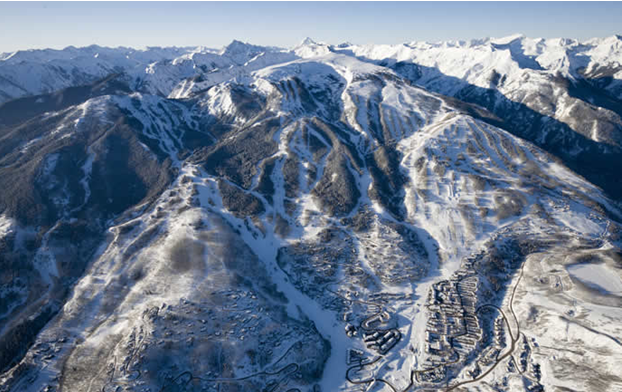
Aspen Mountain now boasts the world's first portable champagne sled bar. For $15 you can now enjoy a glass from on the slopes, at The Oasis, wherever you can find it. The bar will be towed by a snow cat, and be a unique "yellow color. The bar will feature umbrellas, lounge chairs, a solar-powered sound
system, flags and other eye-catching features that will make The Oasis
stand out in the white snow." Plans are for the bar to be traceable via social networking sites.
The opposition worries about the inclusion of alcohol onto ski slopes that already are challenging courses. Slopes in Colorado have already been deadly without drunk skiers. Others have worried that it sends a message of high exclusivity about Aspen.
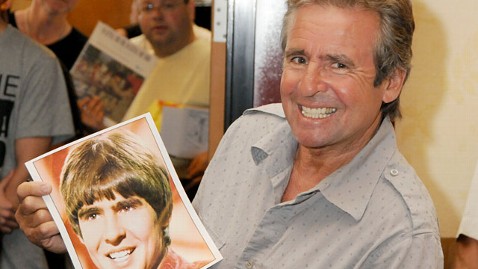
Davy Jones, the heartthrob member of the 60's boy band The Monkees, died Wednesday of a heart attack. Born December 30, 1945 in Manchester, England he had been residing in Florida.
In 1965, The Monkees were put together as an American counter to the Beatles, ironically with their own Brit. Starting with a TV sitcom in 1966, they had two seasons, which were then reaired in the 80's on MTV. The band had several number one hits, and four number one albums. The Monkees continued, even into 2011, to have reunion tours.
Jones, had begun his career on the stage. He starred in "Oliver" as the Artful Dodger, and was on The Ed Sullivan Show February 9, 1964, the same night that the Beatles debuted there. Davy was still immensely popular, and his personal appearances were often sold out.
In a January 2011 message on his blog, he wrote, "I wrote some time ago that not everyone has dreams and hopes that come true. Mine have. Regrets, yes -- if you don't have them you're a fool. However, I thank all of you -- yeah, you -- for your support and love."
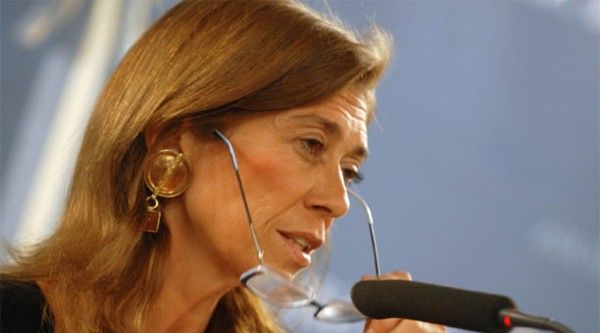
Argentina's industry minister Debora Giorgi helped continue the escalation by Argentina as she began a program of calling on Argentinian companies to cease buying any goods from British companies. Until this week, the Argentinian government had seemed content to focus on just blocking goods from the Falkland islands. But now with the move against British shipping it is a clear enhancing of their growing hostilities.
Earlier this week, two cruise ships that had previously docked in the Falklands, were refused entry into Argentinian ports, simply because they had been to the Falklands.
The UK has sent strong protests over both actions, calling them, "Counterproductive and also a complete misreading of Britain's resolve on this issue." British officials have also called upon the European Union's members to join their protest. "It is clearly very sad that Argentina continues with their policy of confrontation instead of co-operation." said a spokesperson for Prime Minister Cameron.
In just over a month, on April 2, the thirty year anniversary of the Falklands War will take place. On April 2, 1982 Argentina invaded the islands, and were later defeated by a British force sent to liberate the Falklands. Over the past few months Argentina has once again been demanding that the Falklands be turned over to them. Britain is defending the rights of the Falklanders, who wish to remain British.
"With a terrible feeling of pain and loss we announce the passing of Andrew Breitbart. We have lost a husband, a father, a son, a brother, a dear friend, a patriot and a happy warrior. Andrew lived boldly, so that we more timid souls would dare to live
freely and fully, and fight for the fragile liberty he showed us how to
love. Andrew is at rest, yet the happy warrior lives on, in each of us." A great statement about the man from Big Journalism.
Friday morning, just after midnight, Andrew collapsed whilst walking near his home. Paramedics were unable to revive him, and he was pronounced dead later at the hospital. It is stated that it was natural causes, and as he had heart problems last year, it is likely that a heart attack claimed him.
Famous, or infamous depending on your views, for his fight against main stream media, corrupt politicians, and liberals; he was well known as a champion of conservatism. He was known to be a man of honour and courage. Living every day the way he thought best, and encouraging others to do the same. His life may be over, but his mission and message are far from concluded.
He wrote in his book, Righteous Indignation: "I love my job. I love fighting for what I believe in. I love having fun
while doing it. I love reporting stories that the Complex refuses to
report. I love fighting back, I love finding allies, and -- famously -- I
enjoy making enemies. Three years ago, I was mostly a behind-the-scenes
guy who linked to stuff on a very popular website. I always wondered
what it would be like to enter the public realm to fight for what I
believe in. I've lost friends, perhaps dozens. But I've gained hundreds,
thousands -- who knows? -- of allies. At the end of the day, I can look
at myself in the mirror, and I sleep very well at night."
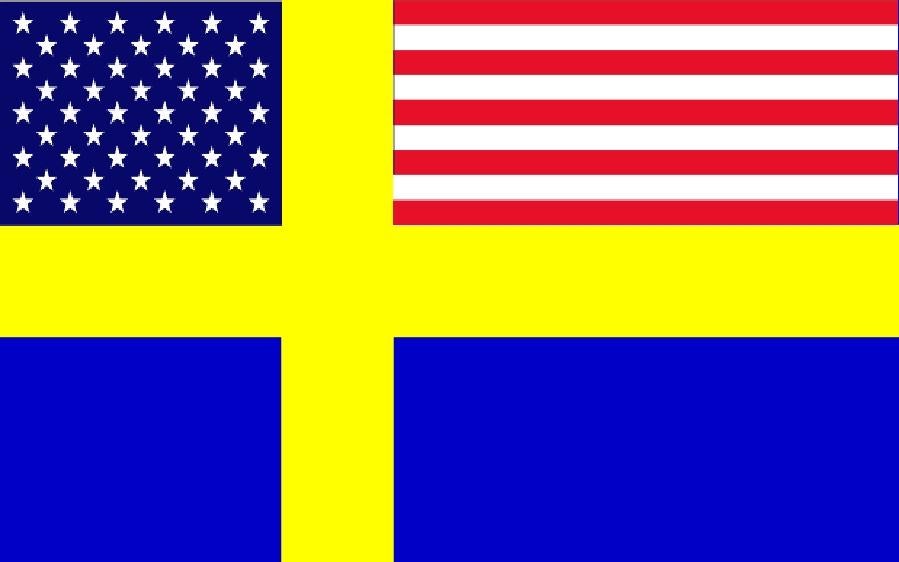
Hejsan! Jag heter William, och jag är an Amerikansk som bor i Sverige. Hello, my name is William and I am an American gent who is working and living in Sweden right now. My friend, Jonathan, recently asked me if I thought there was any way that I could contribute to his communications network, and I thought that it would be a great outlet for me to share my experiences living abroad. He agreed, and so I will do just that.
I have been living here now for two years, and am in the process of getting a contract extension for two more. During the past two years, I have not been back to the USA, though I will be visiting in May. I have become fluent in Swedish, and I am now learning the French language as well. I have met many Europeans here can speak three or four languages. I am just trying to fit in. As for how I spend most of my time, I am a researcher at a university here in the South of Sweden. I am living in Sweden's third largest city, called Malmö, which is in the very southern tip of the country, not very far at all from Denmark's capital city, Copenhagen.
I have plenty to to say about Sweden, and Europe in general. It has been an incredibly amazing experience here. I hope to be able to contribute around once per week. In the mean time, I will leave with a recent observation about a peculiarity of the Swedish language:
Last year, in May, I went out on a work assignment to Ethiopia, a scientific outreach between my department and a university in Addis Ababa. Having never been to the African continent, I was understandably quite excited about this. Hence, I was trying to
ask my colleagues how I say in Swedish 'I am excited!' It was really a struggle
to get a good answer. It seemed rather odd to me that this was so.
Fast forward to just a couple of weeks ago, I was tasked with giving a lecture on my research topic to a small class of students at the university here, in English. After an intensive week of preparation, I gave the lecture, and as typically happens, I left the room feeling great about the whole affair. Really, I could say that I "felt like a million bucks". So again, turning to my Swedish colleagues, I tried to get an exaggerated expression in Swedish equivalent to saying 'I feel like a million bucks'. And again, it was a major struggle, and I am still
waiting for a good answer. "Jag känner mig jättebra" - I feel extremely good, in the Swedish language just does not convey such enthusiasm
Point being- while Swedes, collectively (and believe me, they
are a collective lot - more on that later) display a goodly dose of megalomania,
there is also a rather modest down-to-earth temperament in this society.
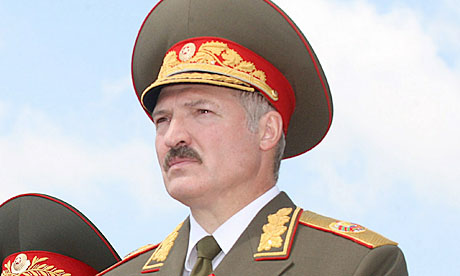
In response to continued sanctions from the European Union, Belarus has ordered the Polish and EU ambassadors to leave the country. The sanctions began after the last election in December 2010, that is considered by many to have been fixed. Many who protested the final vote are still imprisoned. The latest sanctions were in response to Belarus's poor record on human rights.
Germany has led a call for all EU nations to respond by pulling their ambassadors out of Belarus. "This is the last dictatorship, this is the last dictator in Europe,
and we will not let ourselves be intimidated by such actions against one
European institutions or against one member state," German Foreign
Affairs Minister Guido Westerwelle said.
"The European Union and Poland can rely on Germany's solidarity. We
will not let others divide us. The dictator fools
himself when he thinks he can divide us. We will react together. I
suggest that we all recall our ambassadors from Belarus to our capitals.
This is what Germany will do."
The United States also has sanctions against the Belarus's leadership. In December 2011, a year after the questioned elections, the US expanded their own sanctions, but with little complaint from Belarus. It is unknown if the US will join the EU in pulling their ambassador, but it is very possible as the two groups have been working closer and closer together on many subjects, including Iran and Syria.
President Alexander Lukashenko has had run ins with the US and EU before. Nor is this the only election under him to be challenged. During the 2010 elections, other candidates were attacked, kidnapped, and or arrested by police. Since first being elected in 1994, he has officially gained all but total control, and wields authoritarian powers without challenge from the rest of the government.
This fun epic adventure, set in colonial India and based on Rudyard Kipling’s writing, is the ultimate buddy movie. John Huston originally planned it for Humphrey Bogart and Clark Gable, then Gable and Michael Caine, and finally ended up with Caine and Sean Connery, a fantastic combination.
They play Peachy and Danny, British soldiers with reputations as fraudsters, who embark on an audacious scheme, going to a fabled ancient kingdom in Afghanistan where they plan to bamboozle the natives, rule as kings and revel in untold riches and power.
If the film has a lesson, it may be that colonial ambition is folly and failure, or that it’s futile to impose strict order and discipline on a tribal people, certainly that it’s always wrong to believe your own hype. No matter what moral (if any) you take away, you can’t help but admire the arrogant but charming and amusingly clever con men who tragically overestimate how easily their plan will unfold. They gain trust by acting as military “consultants” and help the people of Kafiristan defeat an enemy. Due to the tribe’s limited understanding of modern weaponry and the protection of armor, they are awestruck when an unscathed Connery seems immortal; he seals the deal and seems God-like when his medallion suggests he is the reincarnation of Alexander the Great.
While Connery lets the worship go to his head and becomes the image of hubris, Caine stays true to his cynical self, and is totally focused on the original goal of making off with gold. Predictably, Connery takes things too far and ignores warnings against getting involved with a woman; Michael Caine’s real wife Shakira plays the beautiful object of Connery’s affection and the occasion of his exposure as a mere mortal.
The Man Who Would be King was nominated for four Oscars, but none for acting, which is a shame because the key to the movie, besides the amazing scenery, exciting nonstop pace, appropriately spare Maurice Jarre score, funny lines, and recent Oscar winner Christopher Plummer as narrator/Kipling, the best thing apart from all that is the completely believable bond of friendship grounded in the special chemistry between Caine and Connery. It’s a fun, entertaining throwback to early Hollywood adventure films, neither shallow nor preachy, and like another John Huston classic, The Treasure of the Sierra Madre, shows how a lust for gold and the grandest of plans fall apart because of human stupidity.
This is cross posted from Speakeasy, where you can find further classic entertainment geekery.
More so than in past years, I've noticed more questions from my fellow Protestants about why we would or even should observe Lent. That of course ties in to a larger question of how and why we observe a liturgical calendar at all. And yes, even the people who just shuddered at the term "liturgical calendar" most likely follow one: Christmas, Easter, and Thanksgiving (unless you aren't thanking anyone in particular) are all feasts in your liturgical calendar.
First, a tiny primer of Lent. Lent is the 40 day season of fasting (minus Sundays) recalling Christ's sacrifice for us and preparing our hearts for Easter. Ash Wednesday, the beginning of Lent was February 22 and Easter is April 8. Why aren't Sundays included in Lent? Because every Sunday is a "Resurrection Sunday" and we always feast and celebrate our risen Lord, so Sunday is never a fast day.
But why don't more Protestants observe Lent? Part of it comes from a distrust of "meaningless traditions" and the desire not to add anything to what God requires. I agree that we should always be making sure our form doesn't get in the way of our substance.
Unfortunately in pursuing the very good goal of Christ Alone, we've thrown out many good and beneficial tools that point us to Christ and strengthen our faith.
Traditions are some of these tools that help us remember God's goodness to us and to reinforce His truth. Sort of like an on going catechization. (Is too a word. Or is now a word.) Nobody has no traditions. Which is not technically a sentence with a double negative, but still convoluted. So rather: Everyone has at least some traditions. Do you celebrate birthdays? Anniversaries? Mother's Day? Arbor Day? Traditions. What about treasured possessions: wedding rings, baby books, and "my first" anything? Traditions. One of our family traditions is having chocolate chip pancakes on Saturdays. Even something as simple as breakfast can become a tradition that helps draw our family together.
Throughout the Bible, anytime God did something for his people, they'd build an altar so that they would remember. Why did he do this? I mean He parted the Red Sea and held back the waters of the Jordan? Who would forget that?
Well, we would! This is what we are:
If the Israelites needed reminders, how much more do we need them in our over stimulated, multi-tasking culture? Celebrating birthdays isn't about cake. Well, it's not all about cake, it's telling someone we care about that they're important. Traditions are a way we remember and elevate the important things of life.
C.S. Lewis wrote, "Humans are amphibians - half spirit and half animal. As spirits they belong to the eternal world, but as animals they inhabit time." This explains why attempts to merely "think" or "feel" ourselves into some preferred spiritual state are destined to fail. We need actions and behaviors to pull our bodies along our spiritual walk. And we also need the rhythms of seasonal change.
Just as we can't always be fasting, we can't always be feasting. Many of us feel relief when the Christmas tree comes down, the decorations are put away, and we get back to "normal life." And I love Christmas, from the first Sunday of Advent through the Feast of Epiphany. The year is marked with seasons, so that every year we get not just a new spring, but a renewed spring. Annual traditions remind us what God has done and what he will continually do for us. His mercies are both new and renewed.
"Of course! That's why we celebrate Easter," you counter. "Why do we need Lent and all that icky fasting?" Particularly in this culture we seem more than willing to celebrate any feast we can: Thanksgiving, Christmas, Easter, Groundhog Day--a.k.a. the celebration of sausage. Give us an excuse to party and we are so there. That's why many of us had pancakes or King Cake or copious amounts of alcohol on Mardi Gras, but have no intention (or even knowledge of) observing Lent.
The Lord ordains fasts as well as feasts, and fasting and feasting are two sides of the same coin. The fast makes the feast sweeter, the feast makes the fast more meaningful. It's something we miss in our fast paced, get it now, do it now, instant gratification culture: the joy of anticipation and the pleasure of a feast well earned. In some ways, the cycle of feasting and fasting points to the greater truth that our life on earth is something of a fast in preparation for the eternal Feast with our King.
The Lenten Season is most notably known as a fasting season. The idea of any fast is to put away worldly things and making our flesh conform to the things of the spirit. Traditionally, that means abstaining from some or all food. Nothing brings into sharp relief the strength of our flesh quite like denying it food. But you can abstain from all sorts of things in order that you draw close to God. Some people seem to give up sweets or social media or whatever as a sort Spartan act of denial or some sort of self-improvement exercise. However, the biblical purpose of a fast is to draw near to God, which is why you'll often find the phrase "prayer and fasting" throughout the Bible and other Christian literature.
And now for true confessions from April. I'm not currently fasting anything this Lenten season, at least not yet. I did give up almost all sugar, but that's not for a season and it was for health reasons. So that's not a fast, just my own version of self-torture. (Girl Scout Cookies just came in. Samoas!!! Frozen Thin Mints!!!!) My pastor in Virginia had this wonderful schedule where we'd fast something for a week and dedicated ourselves to a virtue (which he called fasting from and fasting to) for the 6 weeks of Lent. For example, we'd fast from social media and fast to hospitality. I may do that. Or not. Who knows!
Even though I'm not fasting, our family is observing Lent through a Lenten Tree. You can even celebrate a Lenten season that isn't the full 40 days of Lent. Noel Piper has a wonderful book called Treasuring God In Our Traditions that has many great ideas for all sorts of traditions, including Easter and Lent. Bonus: it's a free download from Desiring God! Yeah, buddy!
These are only a couple of ideas for marking Lent. A quick google search of Lenten Devotions brings up enough resources to fulfill your wildest devotional desire. I hope you find some way of marking the season that draws you closer to Jesus. Even though Lent has "officially" started, there is still plenty of time to mark the season. Even if you only concentrate on Holy Week, I think you'll find it makes Easter Sunday more joyous.
My point of this longer than I intended it to be post is that the Lenten Season is a very wonderful and useful tradition. Beyond just advocating for observing Lent (which I do), I encourage you to look into your traditions. Good traditions of both the fast and feast persuasion are useful tools in our sanctification. And of course there are those traditions that are neither good nor useful. But that's another post.
Cross-posted from my blog OddlySaid, where things are said oddly.
No matter which study you read, one thing remains the same, there is a lot of oil available in the territory of the United States, both on and off shore. The United States Geological Service shows that there were 45 billion barrels of oil to be gained in 2005. The Investor Business Daily says there are 112 billion barrels of oil just lying there right now. And the Institute for Energy Research, suggests that there are trillions to be found. Taking the IBD's 112 billion, would give enough gas for 60 million cars, for 60 years.
At the North American Prospect Expo, the Obama administration was heavily criticized for it's hampering of the American economy, by not allowing the country to use it's own oil. Bruce Vincent, president
of Houston oil and natural gas producer Swift Energy, stated that "These have been the most difficult three years from a policy
standpoint that I've ever seen in my career. They've done nothing but restrict access and delay permitting. The Obama administration, unfortunately, has threatened this
industry at every turn."
White House press secretary Jay Carney said President Obama had "put in place policies that will dramatically
expand the amount of exploration in the Gulf of Mexico, will expand the
amount of exploration in Alaska, will expand the amount of natural gas
production here in the US". Yet the administration has revoked 77 oil and gas licenses, in Utah, Wyoming, and Colorado, in 2012 alone. That area has the world's largest deposits of shale oil, and according to the Rand Corp, holds between 1.5 and 1.8 trillion barrels of crude.
Under President Obama, gas prices in the United States have gone from an average of $1.89 a gallon, to their current average of $3.47. And Obama threatens the country with promises of it going up to five dollars a gallon. Presidential candidate, former Speaker of the House, Newt Gingrich, has put forth his plan to get the prices back down to at least $2.50 a gallon. Most of his plan includes drilling here, drilling now, and working with friendlier countries such as Canada, who won't threaten to cut oil off from us as some middle eastern countries like to do.
Environmentalists use scare tactics about how entire habitats will be destroyed by drilling for oil. One of their favourite places is the Arctic National Wildlife Reserve, where an estimated ten billion barrels worth is available. If you listen to them, they would have you believe that the entire park would be marred and killed by using the oil that is there. In reality though, only 2,000 acres out of 19 million would be touched.
The benefits of using our own oil is beyond the obvious of it's being cheaper. The jobs it would create would boost the economy in many ways as well. Ending our reliance on foreign sources, would make the US stronger and back to being more dependent.
Haitian Prime Minister Garry Conille surprised the world and shocked Haiti, when he resigned Friday. After serving only four months, he left office in protest of government officials, including President Michel Martelly, holding dual citizenship. Dual citizenship is not recognized by Haiti. Many Haitians worry that officials might be being controlled by the country they hold their other citizenship in.
United Nations Secretary-General Ban Ki-moon expressed his concern
following Conille's resignation. "This resignation comes at a time when
the Haitian people are eager to embark decisively on the path towards
reconstruction, economic growth and the strengthening of the country's
rule of law institutions," Ban's spokesman said. "The Secretary-General
urges the Haitian authorities to act in the interests of the Haitian
people and appoint a new prime minister as soon as possible.